Ingredients
Best ingredients for dark spots (and how to combine them)
Dark marks fade slowly, and the most important ingredient isn't a serum at all. Here's what's commonly used for uneven tone, and how to build a gentle routine around it.
First, check the spot. Any spot that's new, changing, irregular, bleeding or itching should be seen by a doctor. Melasma and spreading pigmentation are best managed with a dermatologist.
Ingredient #1 is sunscreen
UV and visible light keep stimulating pigment, so without daily broad-spectrum SPF 30+, other ingredients struggle to make a difference. Tinted sunscreens with iron oxides also filter some visible light, and are often recommended for people prone to dark patches.
Ingredients commonly used for uneven tone
| Ingredient | How it may help | When |
|---|---|---|
| Azelaic acid | Interferes with tyrosinase, an enzyme in pigment production. Gentle, and often used for post-blemish marks. | AM or PM |
| Vitamin C | An antioxidant that also interferes with pigment production | AM |
| Niacinamide | May reduce the transfer of pigment to surface skin cells | AM or PM |
| Retinoids | Speed up cell turnover, helping pigmented cells shed. Not for pregnancy. | PM |
| Alpha arbutin, tranexamic acid, kojic acid | Often used in cosmetic brightening serums | Varies by product |
Stronger options for stubborn pigmentation are prescription-only. A dermatologist can advise whether they're right for you.
How to combine them
One morning active and one evening active is plenty for most people:
- Morning: vitamin C (or niacinamide if vitamin C stings), moisturizer, tinted SPF 30+
- Evening: azelaic acid most nights. Once you're settled, a retinoid on alternate nights, if you're not pregnant.
See the full pigmentation routine for a weekly schedule.
Why gentle matters
Irritation can cause new dark marks, especially on medium and deep skin tones. More actives, higher strengths and harsh scrubs often make pigmentation worse. Go slowly, and don't pick at spots.
Realistic expectations
Pigment fades gradually as skin renews, so think in months, not days. Some marks fade on their own over time, deeper pigmentation can be stubborn, and results vary from person to person.
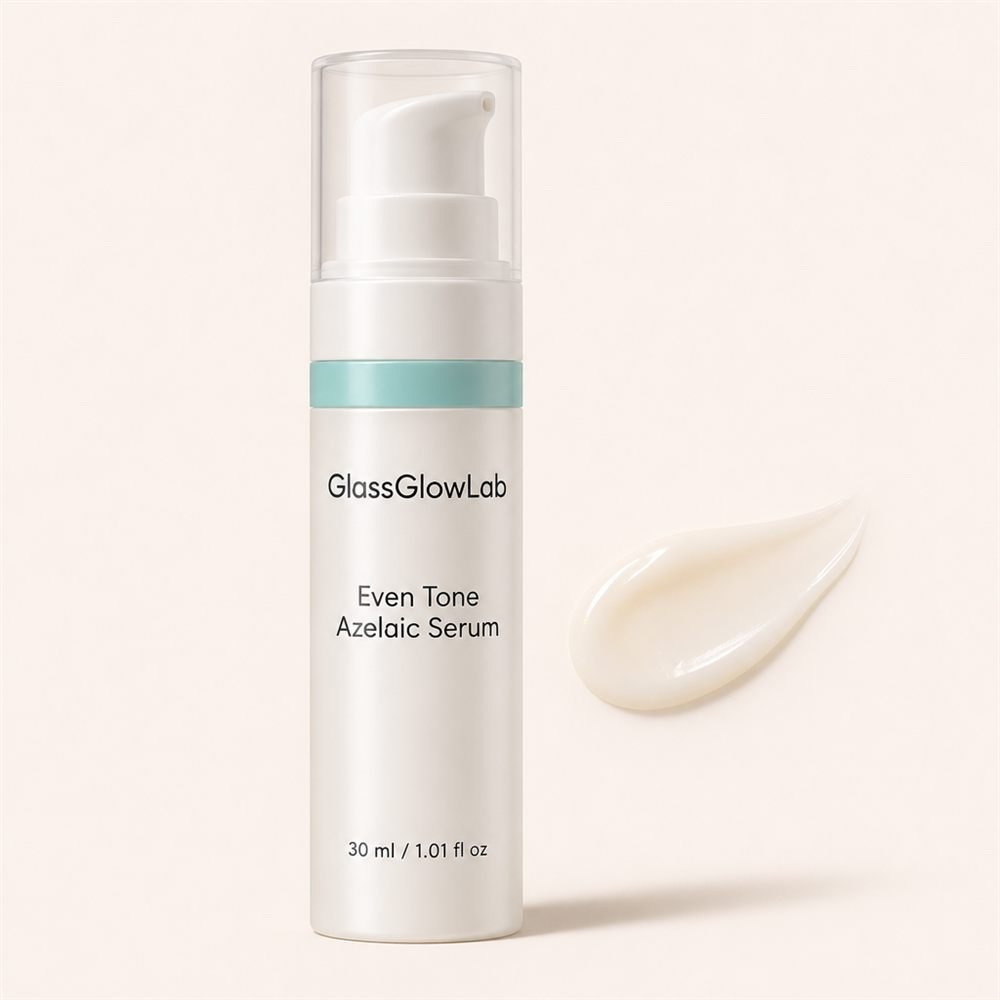
From our shop: Even Tone Azelaic Serum ($26) pairs azelaic acid with niacinamide in one cream-gel step.
Patch-test before you start. Apply a small amount to a discreet area, such as behind the ear, the side of the neck or the inner forearm, once a day for several days. Mild, brief tingling can be normal with some actives. If you notice burning, swelling, itching, blistering or a rash, wash it off and stop using the product. A patch test lowers the risk of a reaction but can't rule one out, so introduce one new product at a time.
FAQ
What is the best ingredient for dark spots?
Daily sunscreen matters most. After that, azelaic acid, vitamin C, niacinamide and retinoids are all commonly used. The best one is the one your skin tolerates and you'll use consistently.
Can I use azelaic acid and vitamin C together?
Yes. A gentle split is vitamin C in the morning and azelaic acid in the evening.
How long do dark spots take to fade?
It varies widely. Post-blemish marks often fade gradually over months with consistent sun protection. Deeper pigmentation can take longer and may need a dermatologist's help.
Are skin-lightening creams sold online safe?
Be careful. Some unregulated lightening products have been found to contain mercury or undisclosed steroids. Choose reputable brands, and ask a dermatologist about stronger options.
References
- Fitton A, Goa KL. Azelaic acid: a review of its pharmacological properties and therapeutic efficacy in acne and hyperpigmentary skin disorders. Drugs. 1991;41(5):780–798.
- Hakozaki T, Minwalla L, Zhuang J, et al. The effect of niacinamide on reducing cutaneous pigmentation and suppression of melanosome transfer. British Journal of Dermatology. 2002;147(1):20–31.
- Telang PS. Vitamin C in dermatology. Indian Dermatology Online Journal. 2013;4(2):143–146.
- U.S. Food and Drug Administration. Skin products containing mercury: consumer warnings. fda.gov.
Related articles


Disclaimer: The content on GlassGlowLab is for educational purposes only and is not medical advice. It is not a substitute for advice from a qualified dermatologist or doctor. Individual results vary. Always patch-test new products and consult a professional if you have a skin condition, are pregnant or breastfeeding, or take medication.