Ingredients
Can you use niacinamide and vitamin C together?
Short answer: yes, for most people. The warning you may have heard comes from old lab studies that don't reflect how modern skincare is made or used. Here's how to combine them comfortably.

Quick answer
- Can you combine them?
- Yes. Most people can use both in the same routine.
- Best order
- Vitamin C first, then niacinamide, then moisturizer and SPF
- Separate them if
- You notice flushing, stinging or redness. Use vitamin C in the morning and niacinamide at night.
Where the "don't mix" myth came from
The concern traces back to older chemistry studies. When niacinamide and pure ascorbic acid were combined at high temperatures, the niacinamide could convert into nicotinic acid, which can cause temporary flushing, and the two could form a complex that seemed to make both less effective.
Those conditions don't match a bathroom shelf or your skin. Modern formulas are made to stay stable at room temperature, and many brands now sell products that contain both ingredients. For most people, layering them is fine.
Why you might want both
- Vitamin C is an antioxidant often used for dullness and uneven tone, and it works alongside your sunscreen during the day.
- Niacinamide supports the skin barrier, may help balance oil and the look of pores, and may help even out tone.
They work in different ways, so they can complement each other in a routine for uneven tone.
How to layer them
- Cleanse and pat dryL-ascorbic acid vitamin C tends to sting less on dry skin.
- Vitamin C serumThree or four drops. Give it a minute to absorb.
- Niacinamide serum2–5% is a well-tolerated range.
- Moisturizer, then SPF 30+In the morning, sunscreen is always last.
Using a gentle vitamin C derivative (such as sodium ascorbyl phosphate)? You can apply it after a hydrating toner, in any order with niacinamide. See our routine order guide.
When to keep them apart
If you notice flushing, warmth, stinging or redness after layering them, split them up:
- Morning: vitamin C, moisturizer, SPF
- Evening: niacinamide, moisturizer
Sensitive skin often does better with lower strengths of both, or with one at a time. If redness persists, it may be worth seeing a dermatologist.
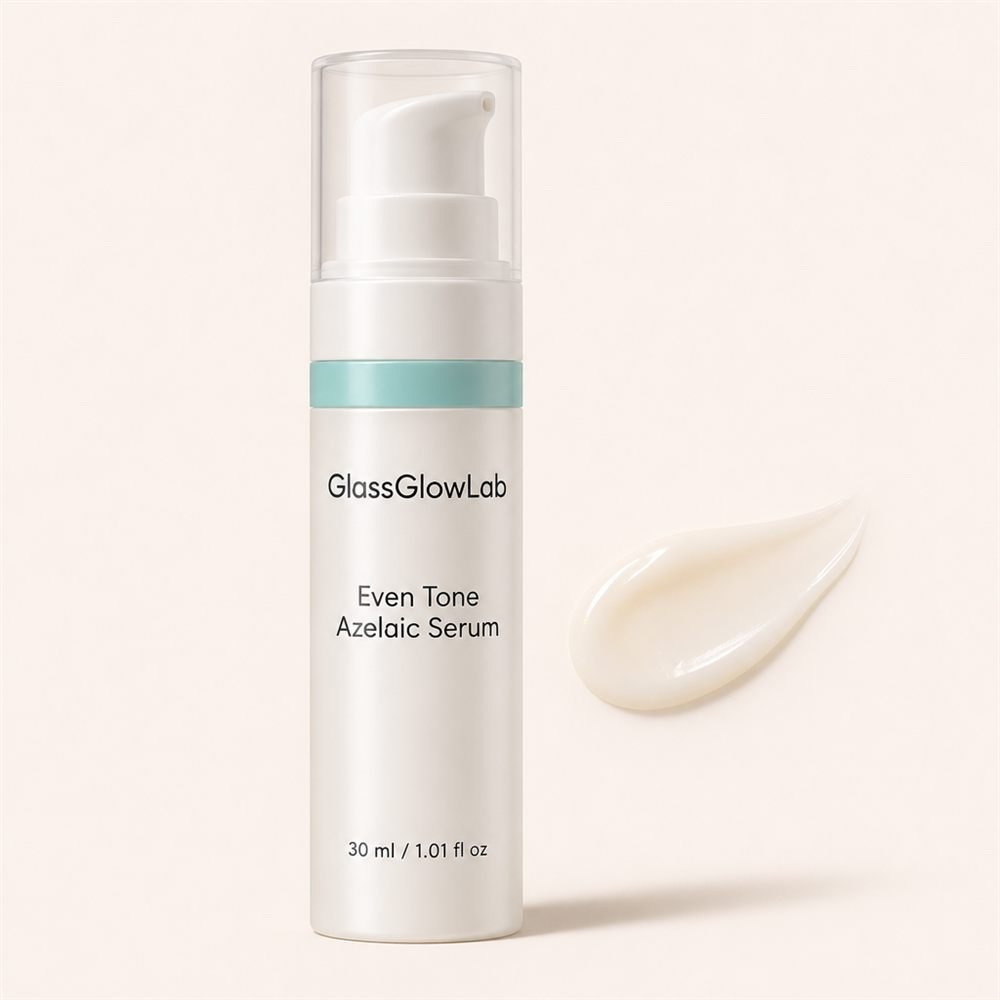
From our shop: Even Tone Azelaic Serum ($26) pairs azelaic acid with niacinamide for an evening tone step, leaving the morning free for vitamin C.
Patch-test before you start. Apply a small amount to a discreet area, such as behind the ear, the side of the neck or the inner forearm, once a day for several days. Mild, brief tingling can be normal with some actives. If you notice burning, swelling, itching, blistering or a rash, wash it off and stop using the product. A patch test lowers the risk of a reaction but can't rule one out, so introduce one new product at a time.
FAQ
Does niacinamide cancel out vitamin C?
Not under normal conditions. The idea comes from older studies using high heat. Modern, stable formulas can be used together.
Should vitamin C or niacinamide go first?
Usually vitamin C first, especially L-ascorbic acid, which is applied to dry skin. Niacinamide follows, then moisturizer.
Can I use niacinamide and vitamin C at night?
Yes, but many people prefer vitamin C in the morning so it supports their sunscreen during the day.
Why does my face flush when I use both?
Some people are sensitive to niacinamide at higher strengths or to the acidity of vitamin C. Try lower strengths, or use them at different times of day.
References
- Pullar JM, Carr AC, Vissers MCM. The roles of vitamin C in skin health. Nutrients. 2017;9(8):866.
- Bissett DL, Oblong JE, Berge CA. Niacinamide: a B vitamin that improves aging facial skin appearance. Dermatologic Surgery. 2005;31(7 Pt 2):860–865.
- Telang PS. Vitamin C in dermatology. Indian Dermatology Online Journal. 2013;4(2):143–146.
Related articles


Disclaimer: The content on GlassGlowLab is for educational purposes only and is not medical advice. It is not a substitute for advice from a qualified dermatologist or doctor. Individual results vary. Always patch-test new products and consult a professional if you have a skin condition, are pregnant or breastfeeding, or take medication.